
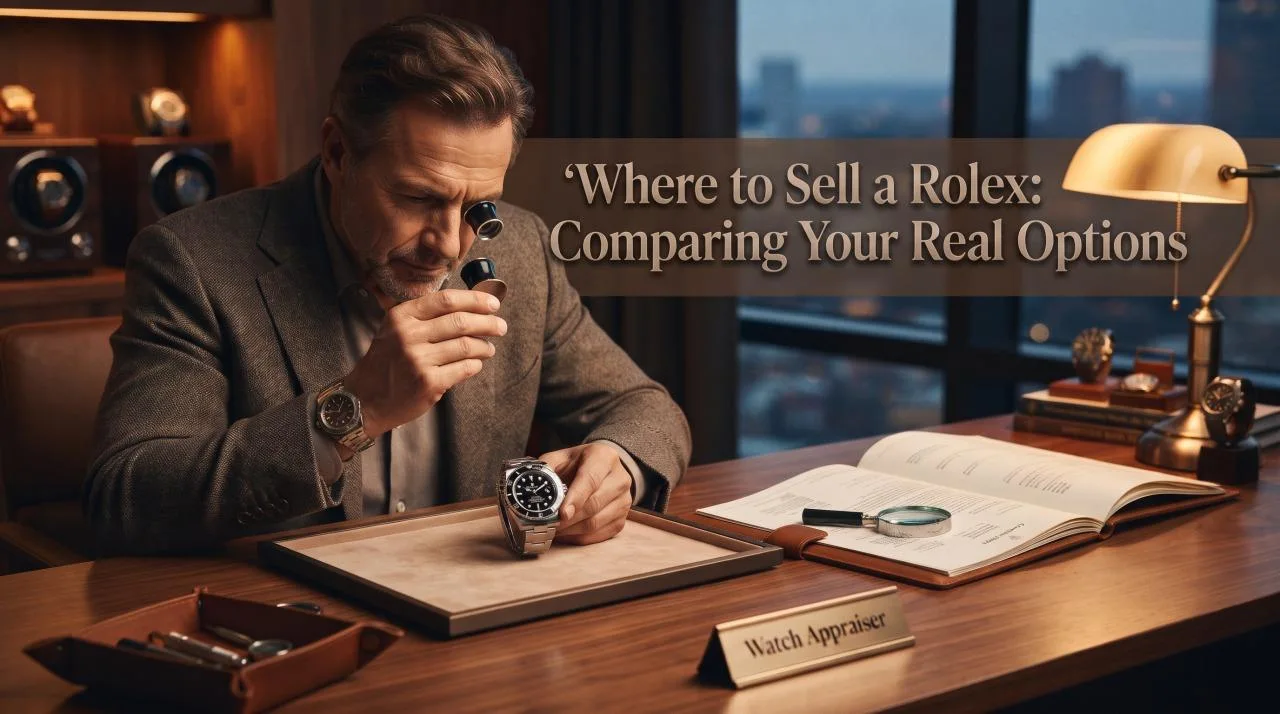
Selling a Rolex can be a significant financial decision. Whether you own a watch you no longer wear, are considering upgrading to another model, or simply want to turn a valuable timepiece into cash, choosing the right buyer matters. Different selling channels offer different advantages, and the amount you receive can vary depending on convenience, market demand, fees, and how much effort you are willing to invest.
There is no single best place to sell every Rolex. A private buyer may offer a higher price, while a reputable watch dealer may provide a faster and more straightforward transaction. Consignment can be useful if you want professional help marketing the watch, although payment may take longer. Online marketplaces offer access to a broad audience, but they also require careful attention to buyer verification, shipping, and payment security.
Understanding these options before listing your watch can help you avoid unnecessary risks and make a more informed decision.
1. Selling Directly to a Professional Rolex or Luxury Watch Dealer
A specialist watch dealer is one of the most straightforward options for someone who wants to sell a Rolex without managing the entire process independently. These businesses regularly evaluate and purchase pre-owned luxury watches, so they are generally familiar with different Rolex models, references, materials, and market demand.
The process usually begins with an initial assessment. You provide details about the watch, including its model, condition, age, and available documentation. The dealer may request photographs before arranging an in-person inspection or asking you to send the watch through an approved shipping process.
After examining the timepiece, the dealer makes an offer. If you accept, the transaction can often be completed relatively quickly.
Advantages of selling to a dealer
Convenience is the biggest advantage. You do not need to create a public listing, respond to numerous inquiries, negotiate with individual buyers, or arrange a private sale.
A specialist may also recognize details that influence the value of a particular Rolex. Two watches from the same collection can have significantly different market appeal depending on their reference, production period, dial, bezel, bracelet, and condition.
Another benefit is that you can compare offers from several businesses. Requesting multiple valuations helps you understand what buyers are willing to pay rather than relying on one company’s assessment.
Potential disadvantages
Dealers purchase watches with the intention of reselling them. They need to account for operating expenses, authentication, potential servicing, inventory costs, and their expected profit margin.
Consequently, an outright dealer offer will generally be lower than the price a private buyer might pay directly. That difference is not automatically a sign of an unfair offer. It reflects the convenience and services involved in a professional transaction.
This option is particularly suitable when speed, simplicity, and a relatively predictable payment process matter more than achieving the highest possible selling price.
2. Selling Through an Online Watch Marketplace
Online marketplaces allow private sellers to reach buyers beyond their immediate geographic area. This can be valuable when selling a Rolex because the ideal buyer may live in another city or country and be actively searching for a particular reference.
Platforms specializing in watches can attract collectors who understand the differences between models and know what they want. General marketplaces may also provide access to a large audience, although sellers need to pay close attention to listing policies and buyer protections.
Greater exposure and pricing flexibility
A major advantage of online selling is control over the listing price. You can research comparable watches, examine competing listings, and decide how much you are willing to negotiate.
You also have more control over how the watch is presented. Detailed photographs, a complete description, and information about the watch’s history can help qualified buyers evaluate the listing.
However, advertised prices should not be confused with completed sale prices. A Rolex listed for a particular amount may remain unsold for months, while a comparable watch may actually sell for less after negotiation.
Understanding marketplace fees
Online platforms may charge listing fees, commissions, payment processing costs, or other transaction expenses. Some also offer authentication services or structured payment processes.
Before publishing a listing, review the current fee schedule and seller protection policies. Calculate what you would actually receive after all applicable costs.
If you are considering where to sell a rolex, an online marketplace may be attractive when you have time to wait for the right buyer and are comfortable managing the listing process. However, a higher advertised price does not guarantee a higher final return.
The challenges of online selling
Selling an expensive watch remotely introduces additional responsibilities. You must evaluate inquiries, identify suspicious buyers, answer questions, negotiate terms, and arrange secure delivery.
Payment disputes and fraudulent confirmations are also concerns. Never release a watch based solely on a screenshot or an email claiming that payment has been sent. Confirm that funds have actually cleared through your financial institution or the platform’s official payment system.
For valuable shipments, use appropriate insurance and follow the carrier’s requirements. Some shipping providers have restrictions on jewelry and watches, so confirm coverage before sending anything.
3. Selling Your Rolex Through Consignment
Consignment offers a middle ground between selling directly to a dealer and managing a private sale yourself.
Under a consignment arrangement, a professional business agrees to market and sell your watch on your behalf. You retain ownership until the watch sells under the agreed terms, and the business receives a commission or fee for handling the transaction.
This approach can be useful for sellers who want professional assistance but are not in a hurry to receive payment.
How the consignment process works
The process generally begins with an evaluation and an agreement about the expected selling price. The business may photograph the watch, create a listing, promote it to potential buyers, and handle inquiries.
Once a buyer completes the purchase, the seller receives the agreed proceeds after the applicable commission and deductions.
The specific arrangement varies by business. Some dealers may offer a fixed commission, while others use a negotiated margin or a different fee structure.
Why choose consignment?
A reputable specialist may already have access to collectors and customers interested in Rolex watches. This can reduce the amount of marketing and communication you need to handle yourself.
Professional presentation may also help buyers feel more comfortable purchasing an expensive pre-owned watch. The business can provide information about the model, arrange inspections, and explain its authentication process.
What to verify before signing
Consignment requires particular attention to the written agreement. Before handing over your watch, establish:
- The agreed asking price and minimum acceptable selling price.
- The commission and any additional expenses.
- Who is responsible for insurance while the watch is in the business’s possession.
- How long the consignment period will last.
- Whether the business can reduce the price without your approval.
- When and how payment will be made after the sale.
- What happens if you decide to withdraw the watch.
The agreement should also explain how the watch will be stored and protected. Never rely on informal promises when a valuable timepiece is involved.
4. Selling Through a Private Buyer
A private sale involves finding an individual who wants to purchase your Rolex directly. This could be another collector, someone interested in a particular model, or a buyer within your personal network.
The primary attraction is the possibility of receiving more than a dealer would offer. Because there is no traditional dealer buying margin, you may have greater control over the final price.
However, the seller also takes on more responsibility.
Finding the right buyer
You can reach potential buyers through watch enthusiast communities, personal contacts, collector groups, and established online platforms that allow private listings.
A buyer who already understands Rolex watches may be easier to work with than someone unfamiliar with the brand. They may ask detailed questions about the reference, service history, condition, bracelet, and original documentation.
Be prepared to provide clear photographs and accurate information. If the watch has scratches, replacement components, missing links, or a service history that you cannot verify, disclose those details.
Managing the transaction safely
Private transactions require careful planning. Avoid meeting an unknown buyer in an isolated location or carrying an expensive watch without taking reasonable precautions.
For an in-person transaction, a reputable watch dealer or professional authentication business may be able to provide a suitable environment for inspection. A bank or another secure, agreed-upon location may also be appropriate for payment arrangements.
Both parties should agree in advance on how authenticity will be evaluated and how payment will be completed.
Private selling can produce an attractive result, but the potential financial benefit needs to be weighed against the time, effort, and responsibility involved.
5. Selling Through an Auction House
Auction houses can be an appealing option for certain Rolex watches, particularly rare, vintage, unusual, or historically significant examples.
Unlike an ordinary listing, an auction creates a competitive bidding environment. Multiple interested buyers may compete for the same watch, potentially producing a strong result when demand is high.
However, not every Rolex is a suitable auction candidate.
Which Rolex watches may benefit from an auction?
Vintage references, unusual dial variations, limited-production examples, and watches with documented provenance may attract specialized collector interest.
An ordinary modern Rolex in a common configuration may not receive the same benefit from an auction setting. In those cases, a direct dealer offer or marketplace listing may be more practical.
Understanding auction fees and timelines
Auction houses generally evaluate a watch before deciding whether to accept it for sale. They may consider its condition, authenticity, documentation, rarity, and expected market interest.
The process can take considerable time. A watch may need to wait for a suitable auction date, photography, catalog preparation, and promotion.
Seller commissions and other expenses can reduce the final proceeds. There may also be a reserve price, which is the minimum amount at which the watch can be sold.
Before agreeing to an auction, request a written explanation of all fees, expected timing, reserve arrangements, and what happens if the watch does not sell.
6. Trading Your Rolex In at a Jewelry or Watch Store
If your goal is to purchase another watch, a trade-in may be more convenient than selling your Rolex separately.
Some jewelry and watch businesses accept pre-owned luxury watches as part of a transaction. The value of your existing Rolex is applied toward the purchase of another item.
This can simplify the process because you are effectively handling two transactions through one business.
When a trade-in makes sense
A trade-in may be attractive when you have already identified the watch you want to purchase. It can reduce the amount of additional money needed and eliminate the work involved in finding a separate buyer.
Some businesses may also offer more favorable trade-in terms when the seller is purchasing another item from their inventory.
Compare the complete transaction
Do not evaluate a trade-in based only on the amount assigned to your Rolex. Look at the total price of the replacement watch and calculate the actual difference you must pay.
For example, a store could offer a relatively generous trade-in value while charging more for the replacement watch than another seller would. Comparing the complete transaction helps reveal whether the deal is genuinely beneficial.
Also confirm whether the trade-in value is cash-equivalent or only available as store credit.
7. Selling to a Pawn Shop
Pawn shops provide another possible route, especially for someone who needs immediate access to money.
Some pawn businesses purchase luxury watches outright, while others offer loans secured by the watch. These are two different arrangements and should not be confused.
A loan allows you to recover the watch if you repay the amount owed under the agreed terms. An outright sale transfers ownership to the business.
Why pawn shop offers may be lower
Pawn shops generally prioritize liquidity and the ability to resell collateral. A business without specialized Rolex expertise may not evaluate a particular reference as carefully as a dedicated luxury watch dealer.
The offer may therefore be lower than what you could receive from a specialist or a qualified private buyer.
If you are considering this route, compare the offer with at least one or two specialist valuations. Read any loan agreement carefully, including interest, fees, repayment deadlines, and consequences of missing a payment.
A pawn shop can provide convenience, but it should not automatically be the first choice when maximizing the value of a Rolex is your main objective.
8. What Determines How Much You Can Get for Your Rolex?
Regardless of where you sell, several characteristics influence the amount a buyer may be willing to pay.
Model and reference number
The exact reference is one of the most important details. A Submariner, Datejust, GMT-Master II, Daytona, and other Rolex collections have different markets, and individual references within each collection can vary considerably.
Identifying the precise reference helps buyers compare your watch with relevant examples rather than relying on a broad model name.
Condition and originality
The condition of the case, bracelet, dial, bezel, crystal, and clasp can affect the offer. Original components and well-preserved details may be particularly important to collectors.
Avoid polishing the watch simply to make it look newer before selling. Excessive polishing can remove metal and soften the original case lines. A gentle, appropriate cleaning is generally a better starting point.
Box, papers, and service records
Original packaging, warranty documentation, additional bracelet links, receipts, and service records can make a watch easier to evaluate.
A complete set may improve buyer confidence and marketability, although the effect on value varies by reference and buyer demand.
If you have the original documents, organize them before requesting an appraisal. Do not publish sensitive serial or personal information unnecessarily in public listings.
Current market demand
Rolex prices are influenced by buyer interest, availability, economic conditions, and the popularity of specific models.
A watch that attracted substantial attention in one period may receive different offers later. For this reason, recent comparable sales are more useful than relying on the price someone paid several years ago.
9. How to Prepare Your Rolex Before Selling
Preparing your watch properly can make the valuation process easier and help avoid misunderstandings.
Start by identifying the model and reference. Gather any available paperwork, box, spare links, receipts, and service documentation. Take clear photographs of the dial, case, bracelet, clasp, and any visible wear.
Be honest about the watch’s condition. Mention whether it keeps time, whether it has undergone servicing, and whether any components have been replaced.
Avoid making repairs or paying for a service before understanding whether the expense is likely to improve the offer. A buyer may have a preferred service process, and the cost of work is not always recovered through a higher selling price.
It is also sensible to obtain several independent valuations. Ask each buyer to explain whether the quoted amount is preliminary or final and what could change after physical inspection.
Finally, compare written offers based on the amount you will actually receive, not simply the highest headline figure.
10. How to Choose the Best Selling Option for Your Situation
The best selling channel depends on your priorities.
If you want a fast and relatively simple transaction, a specialist dealer is often a practical starting point. If you have time and experience managing online sales, a marketplace or private sale may offer more pricing flexibility.
Consignment can suit sellers who prefer professional assistance but are willing to wait. Auction houses may be worth considering for unusual or collectible watches, while trade-ins are convenient when purchasing another timepiece.
Think about the following questions before making a decision:
- How quickly do you need the money?
- Are you comfortable communicating with individual buyers?
- Would you rather receive a firm offer or wait for a potentially higher price?
- Is your Rolex a common modern reference or a rare collectible?
- Are you prepared to handle shipping, insurance, and payment arrangements?
- How much would fees and commissions reduce your final proceeds?
Answering these questions can help you narrow down the options and choose a selling method that matches your expectations.
FAQs
Where is the best place to sell a Rolex?
A reputable specialist watch dealer is often a practical choice for sellers who prioritize convenience, professional evaluation, and relatively quick payment. Private sales and online marketplaces may offer higher potential returns but require more work and carry additional responsibilities.
Can I sell my Rolex without the original box and papers?
Yes. A Rolex can still be evaluated and sold without its original box or documentation. However, missing paperwork may affect buyer confidence and the offer. A reputable buyer may perform additional authentication checks.
Is it better to sell a Rolex privately or to a dealer?
A private sale may produce a higher price because there is no dealer buying margin. Selling to a dealer is generally simpler and faster because the business handles the resale process. The right choice depends on your priorities and comfort with managing a transaction.
Should I service my Rolex before selling it?
Not necessarily. If the watch is running properly, paying for a service may not increase the offer enough to justify the expense. Ask potential buyers whether servicing is necessary before committing to additional work.
Do pawn shops buy Rolex watches?
Some pawn shops purchase Rolex watches outright, while others offer loans using the watch as collateral. Their offers may be lower than those from specialist luxury watch buyers, so comparing valuations is advisable.
How many offers should I get before selling?
Getting at least two or three independent offers is a useful way to understand the market. Compare the actual payment amount, inspection conditions, fees, and transaction terms rather than choosing solely by the initial quote.
How can I avoid scams when selling my Rolex?
Work with established businesses, verify buyer identities, use secure payment methods, and document the watch’s condition. Never release the watch based on an unverified payment confirmation. For shipping, follow the carrier’s rules and confirm that the full shipment is properly insured.
Conclusion
Selling a Rolex involves more than finding someone willing to pay for it. The right decision depends on the watch itself, current demand, your desired timeline, and how much responsibility you want to take on during the transaction.
Professional dealers offer convenience and a relatively direct selling process. Online marketplaces and private buyers provide greater control over pricing, while consignment and auctions can be useful for sellers willing to wait for the right opportunity. Trade-ins and pawn shops serve different financial needs and should be evaluated carefully.
Before committing, identify your exact Rolex reference, gather its documentation, assess its condition, and compare several offers. Pay close attention to fees, payment arrangements, insurance, and written terms.
Ultimately, the best place to sell your Rolex is the one that offers a fair return while matching your expectations for speed, security, and convenience.