
There are many things to consider when developing an AI agent. Whether it be ensuring that the agent is reliable, outfitting it to interface with other services or fiddling with different storage levels, developers have a big task ahead of them. Being familiar with the AI agent tech stack can go a long way in streamlining the development process.
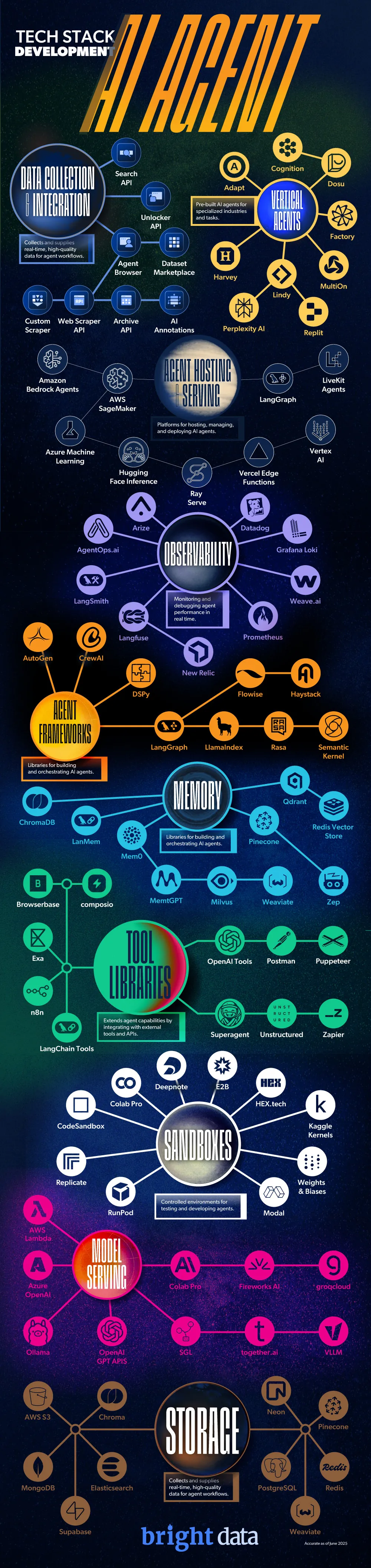
The foundational element of the tech stack is data collection and integration. An agent needs to have a sense of the world in which it operates in order to act reliably, and data provides the agent with that knowledge. Data collection and integration can happen in a variety of ways, such as training a model or implementing a retrieval-augmented generation (RAG) system.
Once the agent has access to high-quality data, the developer can turn to other tools in the tech stack, such as observability or tool libraries. There are many services related to each of these tools that can help developers. For instance, when it comes to tool libraries, a developer might use services like Browserbase, Postman or Puppeteer.
There are many layers to the tech stack, and each one has its own role in the construction of a reliable AI agent. Getting familiar with these layers is one of the most important things that a developer can do, as it can help guide the construction of a successful agent.
Source: Bright Data