

When it comes to determining who should get a loan and for how much, financial institutions put in a tremendous amount of time and effort into calculations. Besides the overall economic forecast, plenty of due diligence is put in to attain a prospective borrower’s financial information and credit history. For this reason, most lenders have relied upon tri-merge credit reports. This type of report involves ordering credit reports from TransUnion, Experian, and Equifax and analyzing the risk comprehensively. Then, lenders take the median credit score of the 3 to price the loan.
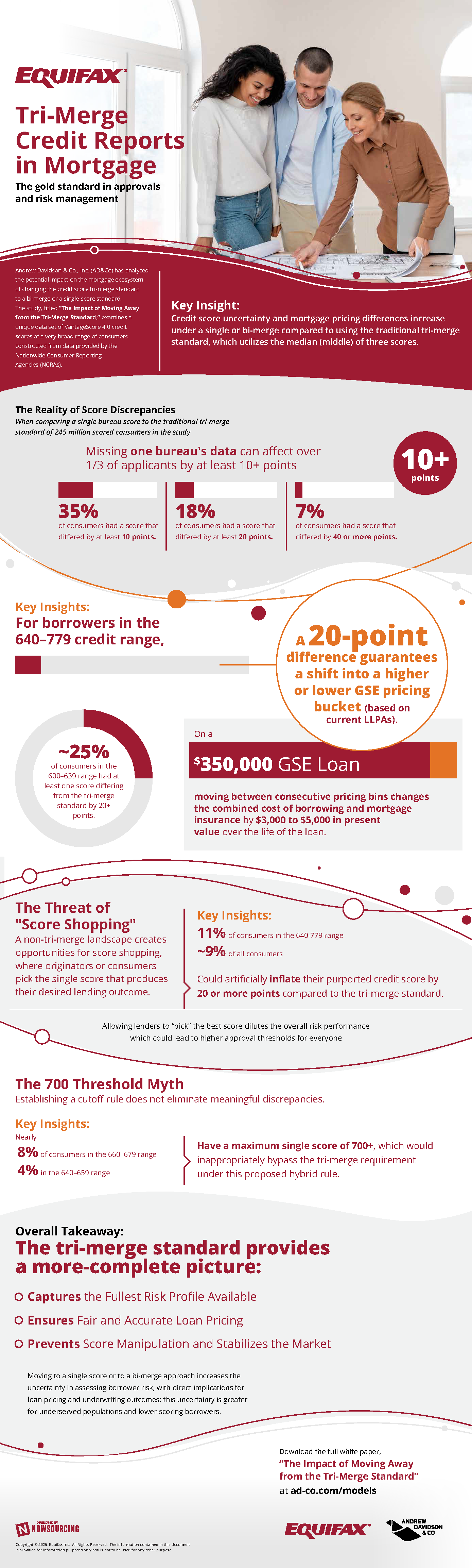
While ordering a report on the same applicant 3 times can feel like overkill, it is absolutely essential to ensure the integrity of mortgages. When only 1 or 2 reports are ordered, an outlier credit score is much more likely to happen and can adversely affect applicants. In fact, it is estimated that omitting even just 1 credit bureau distorts the credit scores of 35% of applicants by 10 points or more. Similarly, omitting a single credit report also leaves lenders vulnerable to missing vital financial information about an applicant. Ultimately, the best way to make sure a full financial picture is evaluated is to get as much information as possible. In the case of lenders, that means continuing to order tri-merge credit reports for all prospective applicants.
Source: Equifax