
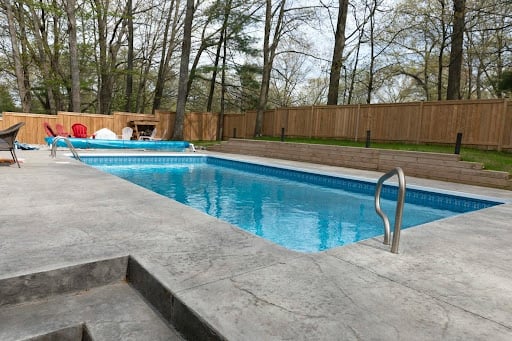
Installing an inground pool is a major investment, so you must get it right. For homeowners seeking a durable option, fiberglass and gunite pools are the two obvious choices.
Gunite has long been the gold standard for luxury pools because of its durability and virtually limitless design options. Fiberglass pools, however, have surged in popularity because they offer faster installation, lower maintenance and impressive long-term durability.
That said, is the convenience of fiberglass worth the trade-offs in customization? This guide provides a comprehensive comparison of fiberglass vs. gunite pools to help you make an informed choice.
Which pool type has the lowest long-term maintenance costs over 10–20 years?
When doing an in-ground pool maintenance comparison, fiberglass pools have the lowest long-term maintenance costs. Their non-porous gelcoat surface resists algae growth, which reduces chemical use and cleaning time. They also do not require resurfacing, a major cost factor over time.
Gunite pools, while durable, use porous plaster or aggregate finishes that demand more chemicals, frequent brushing and periodic resurfacing, usually every 10 to 15 years. These ongoing expenses add up. Over a 10 to 20-year period, fiberglass is generally the more cost-effective option due to fiberglass pool longevity, lower upkeep and fewer major repairs.
How does the installation process and speed differ between fiberglass and gunite?
Fiberglass pools come as pre-molded shells delivered to your property. Once excavation is complete, the shell can be installed in a matter of days.
In many cases, the entire project is finished within 2–4 weeks, though more complex jobs may take up to six weeks. This shorter pool installation timeline minimizes disruption to your yard and daily routine.
Gunite pools, by contrast, are built entirely on-site. The process involves installing a steel rebar framework and spraying it with a concrete mixture, followed by curing, finishing and additional detailing. This takes 8–12 weeks or longer, depending on the design complexity, weather conditions and permitting process. The extended construction period increases labor costs and delays when you can start using the pool.
Can fiberglass pools withstand freezing climates as well as gunite pools?
Yes. According to the pool construction experts at Liquid Luxury Pools, fiberglass pools can withstand freezing climates just as well as gunite pools when properly installed and maintained. The fiberglass shell is slightly flexible, which allows it to expand and contract with ground movement during freeze-thaw cycles. This reduces the risk of structural cracking.
Gunite pools are extremely strong but more rigid. Over time, they may develop surface cracks in harsh winter conditions, especially if the ground shifts. However, both pool types perform well in cold climates when proper winterization procedures are followed. This includes managing water levels, protecting plumbing lines and maintaining balanced water chemistry.
Climate alone should not be a deciding factor. Both fiberglass and gunite pools are reliable in freezing conditions if installed correctly.
What are the limitations in design, shape and depth when choosing fiberglass?
This is where gunite pool customization options stand out. Gunite can be built in virtually any shape, depth or layout. Whether you want an infinity edge, a beach entry or a deep diving area, gunite gives you full creative control.
Fiberglass pools are manufactured from pre-set molds, which limits design flexibility. While there are many modern shapes and sizes available, you won’t get full customization. Depth options are also more limited compared to gunite. For homeowners with a very specific vision, this can be a drawback.
How do the interior surfaces (gelcoat vs. plaster) affect chemical usage and algae growth?
The interior surface plays a major role in maintenance. According to the pool construction experts at Liquid Luxury Pools, modern fiberglass pools use a gelcoat finish that is smooth and non-porous. This makes it harder for algae to grow and reduces the need for aggressive chemical treatments. It also means less scrubbing and easier upkeep.
Gunite pools typically use plaster or aggregate finishes, which are more porous. These surfaces can harbor algae and require more frequent cleaning and stronger chemical use. While upgraded finishes like pebble or quartz improve durability, they still need more maintenance than fiberglass.
Final words
When comparing fiberglass vs. gunite pool cost, fiberglass stands out for lower maintenance and faster installation, while gunite offers unmatched design flexibility. A fiberglass pool is often worth it if you want convenience and long-term savings. However, if customization matters most, gunite remains the better choice for a fully tailored pool.