
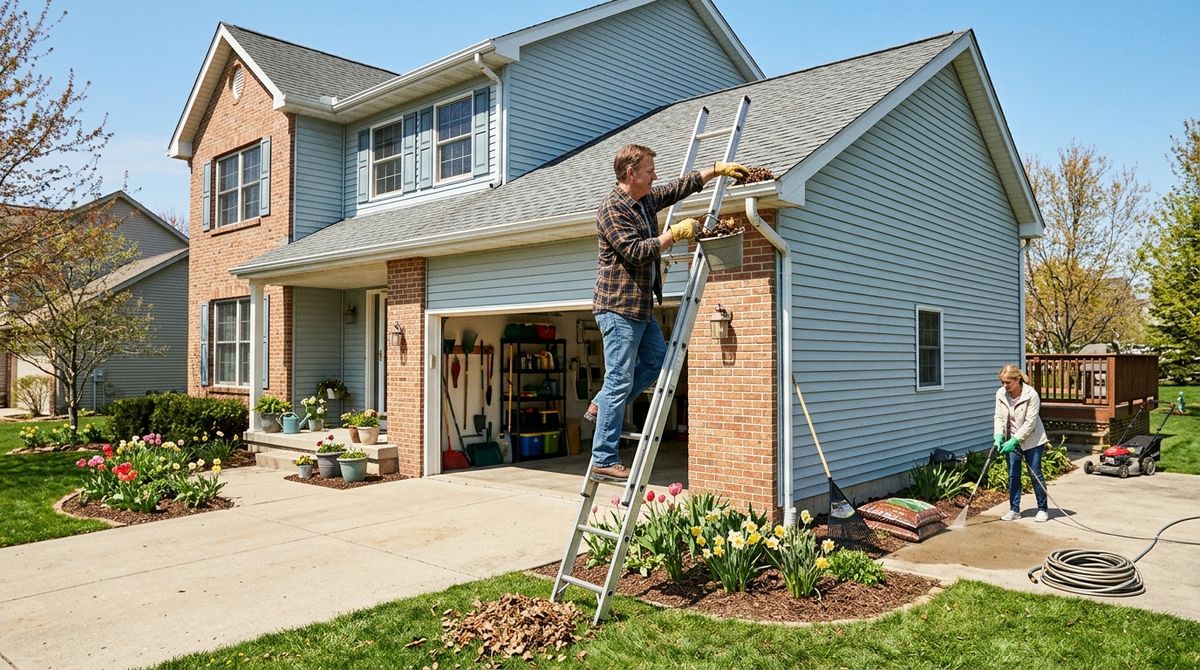
Homeownership feels far calmer when routine upkeep and monthly budgeting work together on the same seasonal calendar. Many families get caught off guard by a furnace repair, a summer cooling spike, or autumn roof work because those costs never appeared on a yearly plan. Pairing quarterly home tasks with seasonal savings goals turns predictable wear into manageable line items. Planning ahead also protects emergency funds for true surprises.
Every house ages differently through humid summers, freezing winters, spring rain, and falling leaves. Breaking upkeep into four focused seasonal checklists protects property value. It also keeps household finances steady throughout the year. A small, consistent plan beats a last-minute scramble every time.
Spring Exterior Inspections and Cash Reserve Resets
Melting snow and spring rain quickly reveal how well a home handled winter. Walking the property in spring to inspect roof shingles, clear downspouts, check foundation grading, and test outdoor spigots catches moisture problems early. Those small repairs cost far less than interior damage. Early inspection is one of the smartest budget tools a homeowner has.
Readers may also want to visit Crioceras.com. Servicing the air conditioner in spring avoids peak-summer technician waits and keeps cooling bills steady. A modest monthly transfer into a dedicated maintenance account means money is ready when repairs arise. Reviewing the past winter’s utility bills then helps adjust monthly budget categories.
Summer Energy Efficiency and Outdoor Project Pacing
Long summer days invite exterior painting, deck sealing, fence repairs, and garden work, yet hardware store trips can drain checking accounts quickly. Setting a firm summer project budget before shopping keeps outdoor upgrades enjoyable instead of stressful. Finishing one project at a time prevents half-done yard work and scattered tool purchases. A clear list makes every trip purposeful.
Before any purchase, compare the planned cost with the amount set aside for that season. If the total runs higher, postpone the least urgent item to the next quarter. Keeping receipts in a single envelope makes the review quick. Simple tracking keeps every project within its budget.
You can also visit product-review.org for more reading. Closing sun-facing curtains during peak afternoon heat reduces strain on cooling equipment. Running dishwashers or dryers in the evening also helps keep the system from working harder than it needs to. Small habits protect both comfort and the monthly budget.
Autumn Weatherization and Insurance Policy Checkups
Crisp October afternoons offer ideal conditions for sealing window drafts, replacing worn door sweeps, flushing sediment from water heaters, and scheduling heating tune-ups. A single weekend spent on weatherstripping and exterior caulk pays off in lower winter bills. Warmer rooms make the whole house more comfortable through the cold months. These tasks are inexpensive compared with their benefits.
For a related read on this site, see Protecting Your Home, Family, and Finances With Simple. Verifying that dwelling limits and deductibles still match current needs brings quiet peace of mind before storms arrive. Keep the policy documents in an easy-to-find folder. Clear paperwork speeds up any future claim.
Keeping a short list of contractor names, phone numbers, and warranty expiration dates makes urgent repairs faster to arrange. Many homeowners forget these details until something breaks. A quick review each spring keeps the list current. Organized contacts save time and stress.
Winter Indoor Upkeep and Next-Year Financial Planning
Cold winter months move home care indoors, toward testing smoke and carbon monoxide detectors, cleaning refrigerator coils, and organizing warranty folders. Quiet evenings work well for updating a simple maintenance log that records filter sizes, paint colors, and service dates. A current log saves time during future repairs. Good records also help when it is time to sell.
Reviewing the maintenance log with a trusted advisor each year can reveal gaps in planning. An advisor may suggest a lower-cost approach for a recurring repair or flag a system nearing the end of its service life. Acting on those suggestions early keeps surprises small. Thoughtful planning is an investment in comfort.
Reviewing total annual home spending every December clarifies how much to set aside for next year’s repair fund. Dividing that figure into monthly amounts makes saving feel effortless. Adjusting the plan each year keeps it accurate. Steady planning turns homeownership into a well-funded rhythm.
Protecting Comfort and Financial Stability All Year
When home care and household budgeting move in step with the seasons, houses stay healthier and finances stay calmer. Small preventive habits practiced every ninety days safeguard both living space and peace of mind. Consistency matters more than size. A steady plan keeps surprises manageable.