
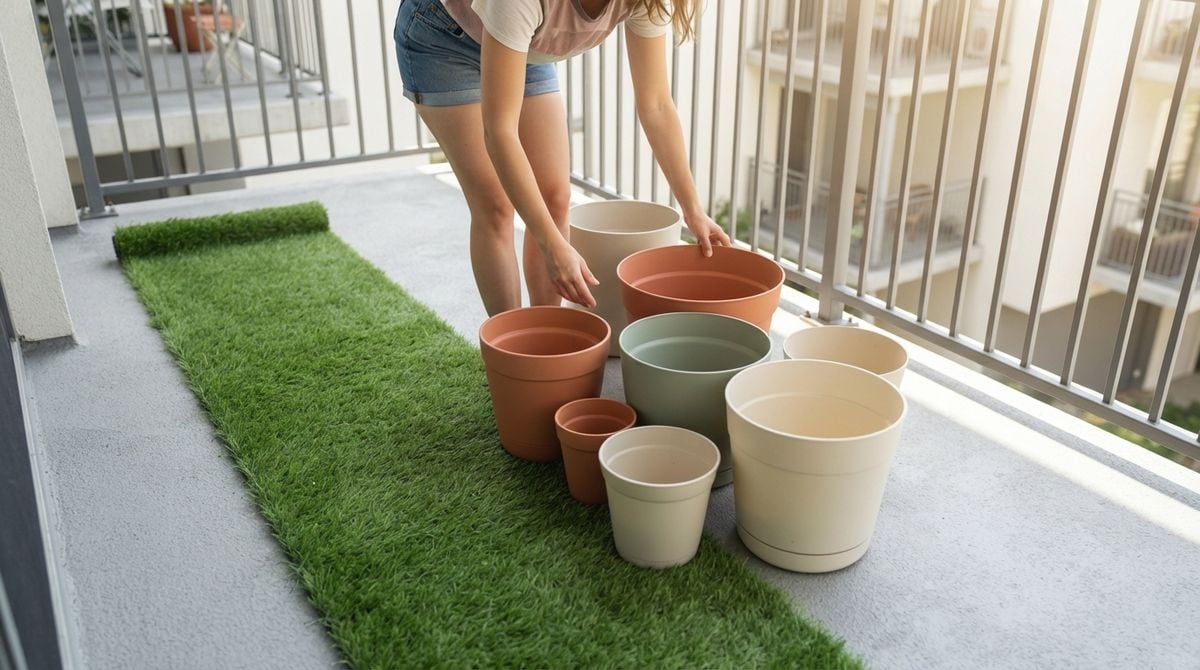
A balcony can hold a surprising amount of life. A few pots of basil, a trailing plant or two, and a cat who wants to sit in the sun and watch the street can all share the same small space. The arrangement works well, but it takes planning. Cats climb, dig, chew and knock things over, and many common garden plants can upset a pet’s stomach or cause more serious trouble. This guide walks through a practical setup that keeps the cat comfortable, the plants healthy and the balcony pleasant for people too.
Choose the right containers and layout
Start by thinking about where your cat actually spends its time. Most cats like a sunny corner with a clear view, a perch they can reach without jumping from a wobbly table, and a shaded spot for hot afternoons. Put the heaviest planters against a wall or along the railing rather than in the middle of the floor, where a swishing tail can send them over. Wide, low containers are steadier than tall, narrow ones, and heavy clay or stone pots are harder to tip than lightweight plastic.
Soil deserves attention too. Many cats are fascinated by freshly turned earth and will dig in pots, leaving a mess and sometimes eating what they uncover. A layer of larger gravel or smooth stones on top discourages digging and keeps the soil cooler in summer. Some owners lay a flat piece of wire mesh over the soil until the plants are established. Not every cat reacts the same way, so watch your own animal for a week or two before deciding what works. Readers may also want to visit bullhornnews.com.
Know which plants to avoid
This is the part that deserves the most care. Several popular plants are known to be harmful to cats, including some lilies, certain ivies and some flowering bulbs that are often sold for spring displays. Herbs such as mint and basil are commonly grown around pets, but a cat can still chew on any leaf and may react to it. Before you buy, read every plant label and look up the botanical name in a reliable source. Common names vary from region to region, so a plant sold under a friendly name may turn out to be something entirely different from what you expected.
Keep a short written list of everything you grow on the balcony, including botanical names. If your cat chews on something unfamiliar, you will be able to tell your veterinarian exactly what was nearby, which saves time in an urgent moment. You can also visit Simpcity for more reading.
- Confirm the botanical name and check it against a trusted pet-safety source.
- Remove any plant with fallen petals, berries or seed heads that a cat could swallow.
- Keep fertilizers, pesticides and slug baits in a closed cupboard, never on the balcony floor.
- Check that each pot is stable and that the soil surface is covered.
- Place a shallow dish of fresh water in a shaded corner, away from the plants.
Build a routine that suits both of you
Cats do best with predictable days. Feed, water and clean the litter tray at roughly the same times each day, and spend a few minutes of play near the balcony door so the animal learns that the space is a shared and enjoyable place rather than somewhere to wander alone. A sturdy scratching post or a cat tree placed near the window gives the cat a second outlet for energy, which often reduces attempts to climb the plant stands.
Plants also need a routine. Water early in the day so leaves can dry before evening, and check the top layer of soil with a finger rather than watering on a fixed timetable. Pots in full sun dry out much faster than those in shade, especially in warm weather. Wipe dust from the leaves now and then so the plants can photosynthesize properly, and remove yellowing or damaged leaves promptly, since a cat may be drawn to the movement of falling foliage.
Protect the balcony from wind, heat and falls
Balconies are exposed spaces. Strong gusts can topple tall plants, and a metal railing with wide gaps can be a real hazard to a curious cat. Many owners fit netting or a purpose-built pet enclosure, and the right choice depends on how the building is constructed and what the landlord allows. Check that any netting is fixed firmly, that there are no sagging areas a cat could push through, and that the door latch closes securely. For a related read on this site, see How to Arrange a Shared Family Space So.
Heat is the other risk. A balcony floor can become hot quickly on sunny days, and metal surfaces can burn paws. Provide a shaded resting spot, and avoid placing the cat carrier or bed in direct sun for long periods. In cooler months, shelter tender plants behind glass or move them indoors before the first frost, and make sure the cat has a warm, draft-free place to sleep.
Try to start with a small number of plants and add more over time. A simple mix of two or three herbs and one hardy flowering plant is easier to manage than a crowded display, and it gives you a clear sense of how the cat reacts. Note what happens each week: which pots get disturbed, which corners the cat prefers, and which plants recover well. With careful choices and a steady routine, a balcony can be a calm and enjoyable space for both the cat and the plants. The key is to think like the animal, notice where it climbs, where it rests and what it tries to chew, and then arrange the space so the safest option is also the most comfortable one.