
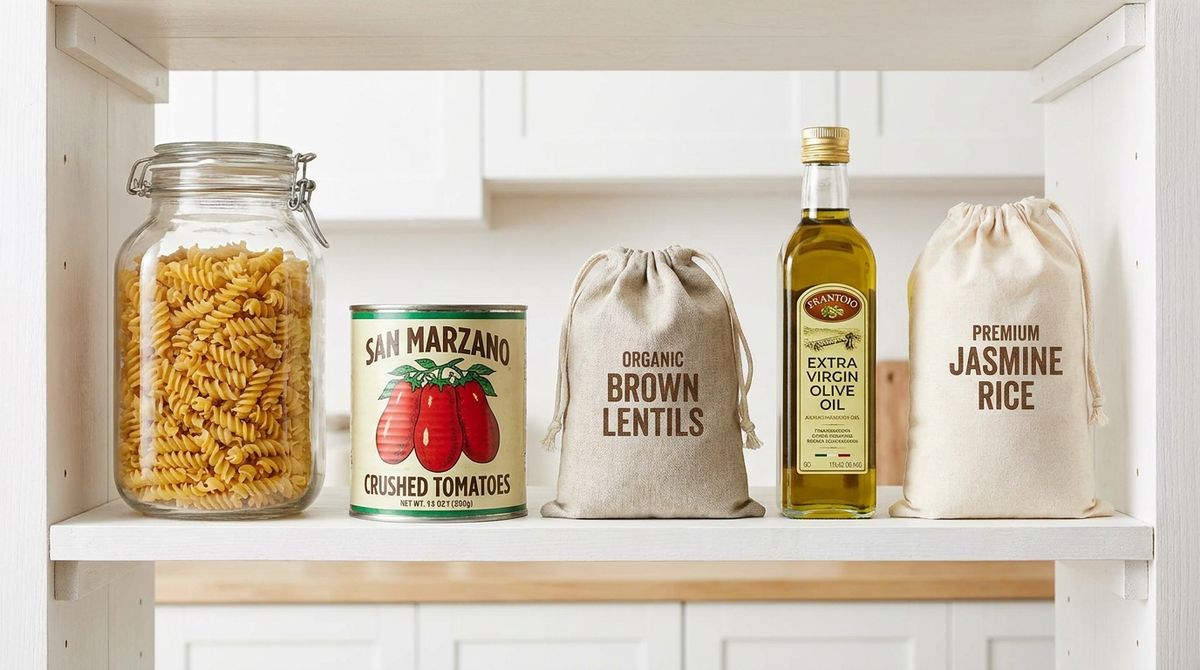
A bag of lentils bought in a hurry can sit at the back of a cupboard for a long time. By the time it is needed, the label has faded, the bag has a small tear and nobody remembers the cooking time. Dried beans and grains are cheap and useful, yet they often get lost in a crowded kitchen.
This article describes a simple way to store, label and rotate dry staples so every bag gets used before it loses quality. It covers choosing containers, setting up a shelf zone, writing clear labels and running a short monthly check. The guidance is general home kitchen practice for anyone who keeps a stock of pantry goods.
Choosing Containers That Keep Moisture Out
Clear containers with tight lids let you see the contents and keep humidity away from the grains. Glass jars work well for small amounts, while sturdy plastic bins suit larger bags of rice. Readers may also want to visit Where the young learn to fly. Choose a size that matches how often each item gets used.
Avoid leaving beans in bags that are thin or torn, because a loose seal lets in pests and damp air. Transfer the contents soon after purchase rather than waiting until the packaging looks worn. Wipe each container dry before refilling it. A dry start makes the whole system last longer.
Setting Up a Shelf Zone for Staples
A dedicated shelf zone keeps dry goods together and makes the stock easy to count at a glance. Place the most used items at eye level and the bulk bags on a lower shelf where they are easy to lift. You can also visit Fullformguide for more reading. A zone that is clearly marked stays tidy far longer than a mixed cupboard.
Keep the zone away from the stove, the dishwasher and any spot where steam collects. Warm and humid spaces shorten the life of flour, rice and dried beans. Leave a small gap between containers so you can reach each item without shifting the others. Good spacing also makes a quick count much easier.
Labeling With Dates Instead of Guesses
A date on every label is the simplest way to rotate stock without thinking. Write the purchase month and the type of grain on the lid, then add the cooking time on a card inside the cupboard door. For a related read on this site, see Designing a Dedicated Corner for Your Daily News. Apply the same format to every container so the routine stays easy to follow.
Put newer bags behind older ones, a method that cooks often call first in, first out. The habit takes only a few seconds each time you unpack groceries. Over time it prevents a forgotten bag from surfacing months later. A simple habit beats a complicated inventory list.
Running a Monthly Shelf Check
Once a month, take a few minutes to scan the shelf zone and note any container that is running low. Check for signs of moisture, clumping or insects, and discard anything that smells stale or looks unusual. Write the findings on a small card taped to the cupboard door. A regular glance catches problems while they are still small.
Plan the next week of meals around the items that are closest to their best use. This keeps the stock moving and makes shopping more focused. Add only the items that are missing from the zone, rather than buying extra out of habit. A calm stock is easier to manage than a full one that nobody uses. Keep the stock list short so it is easy to update.
Refilling Without Mixing Old and New
Refilling a container is the moment when old and new stock most often mix. Empty the container fully, check the lid for crumbs and wipe the inside before adding a new bag. Pour the fresh contents in gently so the seal stays clean. Write the new date on the label straight away.
If a bag is only partly used, transfer the rest into its original container rather than a second one. Keep the leftover portion sealed tightly and note the date it was opened. A single container for each grain reduces confusion and keeps the shelf easy to read.
A Pantry That Stays Useful
A well ordered stock of beans and grains saves time, reduces waste and makes weeknight cooking easier. Good containers, a clear zone, honest labels and a short monthly check are enough for most homes. The reward is a pantry that is ready whenever dinner needs a quick start.